


Dengue in Monsoon: How to Spot It, What to Do, and When to See a Doctor
Dengue risk rises every monsoon in Bangladesh. Know the symptoms, simple prevention steps at home, and the warning signs that need a doctor right away.
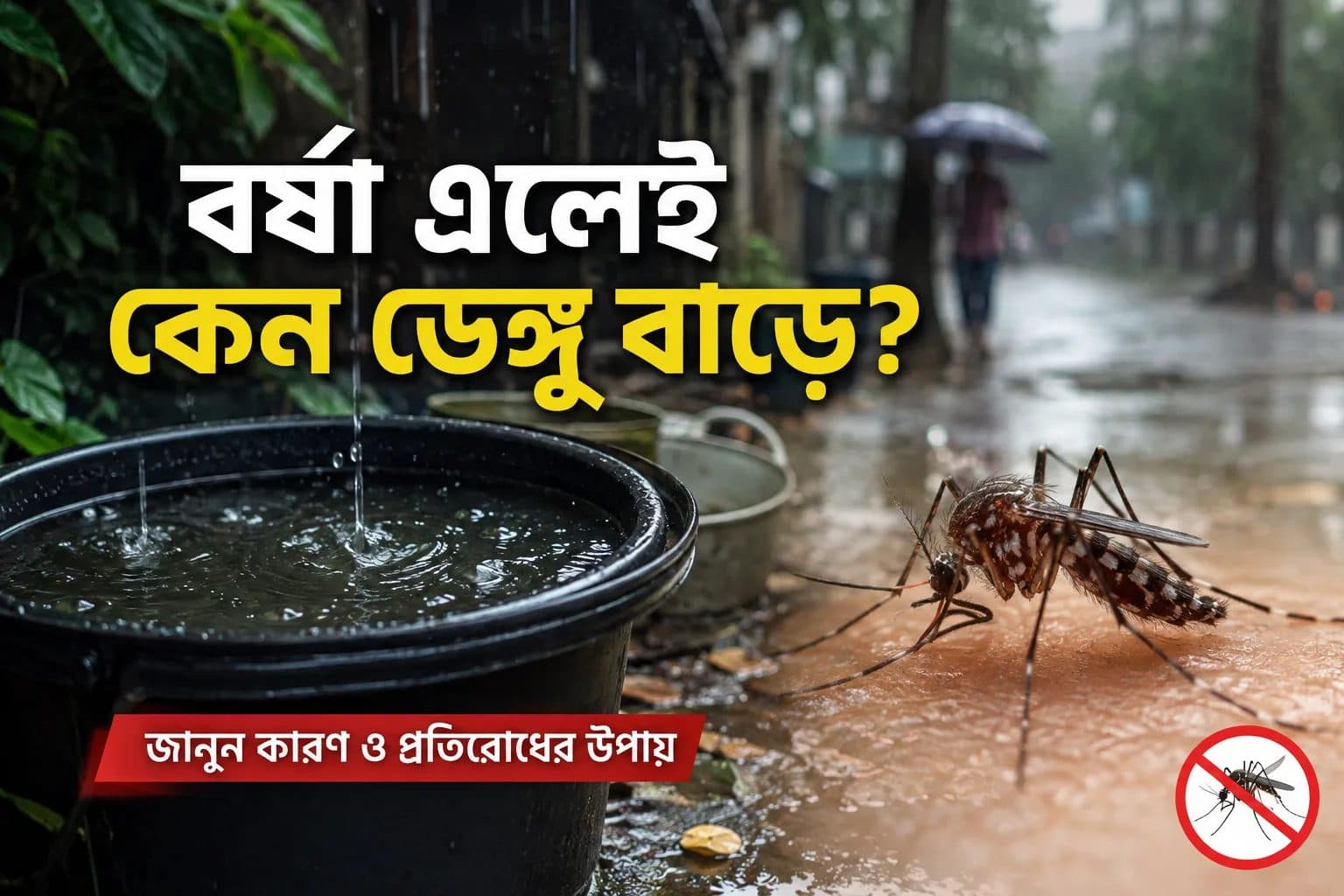
Why dengue spikes during the rainy season
Dengue spreads through the bite of the Aedes mosquito. Unlike most mosquitoes, this one does not breed in dirty water. It lays its eggs in clean, standing water.
That is exactly what the monsoon creates everywhere: rooftops, balconies, construction sites, flower pots, and discarded tyres all collect small pockets of rainwater. A single teaspoon of water is enough for this mosquito to breed. This is why checking your own home matters far more than any outdoor fogging drive.
Common symptoms of dengue
For the first day or two, dengue can look exactly like an ordinary viral fever. A few signs point more strongly towards dengue.
Sudden onset of high fever
Severe headache
Pain behind the eyes
Body and joint pain, which is why it is often called breakbone fever
Nausea or vomiting
A red rash on the skin
Unusual weakness and fatigue
Not everyone gets every symptom. Some people stay mildly ill while others deteriorate quickly. Symptoms alone cannot confirm dengue, so testing matters.
Warning signs that need immediate attention
Go to a hospital or see a doctor right away if any of these appear.
Severe abdominal pain
Repeated vomiting
Bleeding from the nose or gums, or black stools
Difficulty breathing
Extreme restlessness or drowsiness
Passing much less urine than usual
Many families get one thing wrong here. The 24 to 48 hours after the fever comes down is often the most dangerous window in dengue. A falling temperature does not mean the danger has passed. Watch the patient closely during this period.
Seven things you can do at home
Walk around your roof, balcony and yard at least once a week and check for standing water
Empty the trays underneath flower pots
Clean the drip tray behind your refrigerator and the water collection point of your AC
Keep water tanks and buckets covered
Clear away discarded tyres, broken containers and coconut shells
Use mosquito nets during the day as well, especially for children and elderly family members
Wear clothing that covers the arms and legs
What to do at home if someone has fever
Keep fluid intake high with water, coconut water, oral saline or soup. Dehydration makes the condition worse quickly.
Make sure the patient rests properly.
Do not take any painkiller on your own. Certain common pain and fever medicines can increase the risk of bleeding in dengue. Let a doctor decide which medicine is appropriate.
Get blood tests done as advised by your doctor.
Find the right doctor
For dengue or any persistent fever, you would usually consult a Medicine specialist. For children, a Pediatrician.
On DoctorsFindBD you can search by area and specialty, and see chamber addresses along with visiting hours. Find a doctor
This article is for general health awareness only. It is not medical advice and is not a substitute for diagnosis or treatment. If you notice any symptoms, please consult a registered physician.