


Suspected Dengue in Khulna: When to See a Doctor and Which Specialist
Fever alone is not a reason to panic, but waiting it out is not safe either. A practical guide for families in Khulna on when to see a doctor for suspected dengue, which specialist to consult, and how to prepare before the visit.
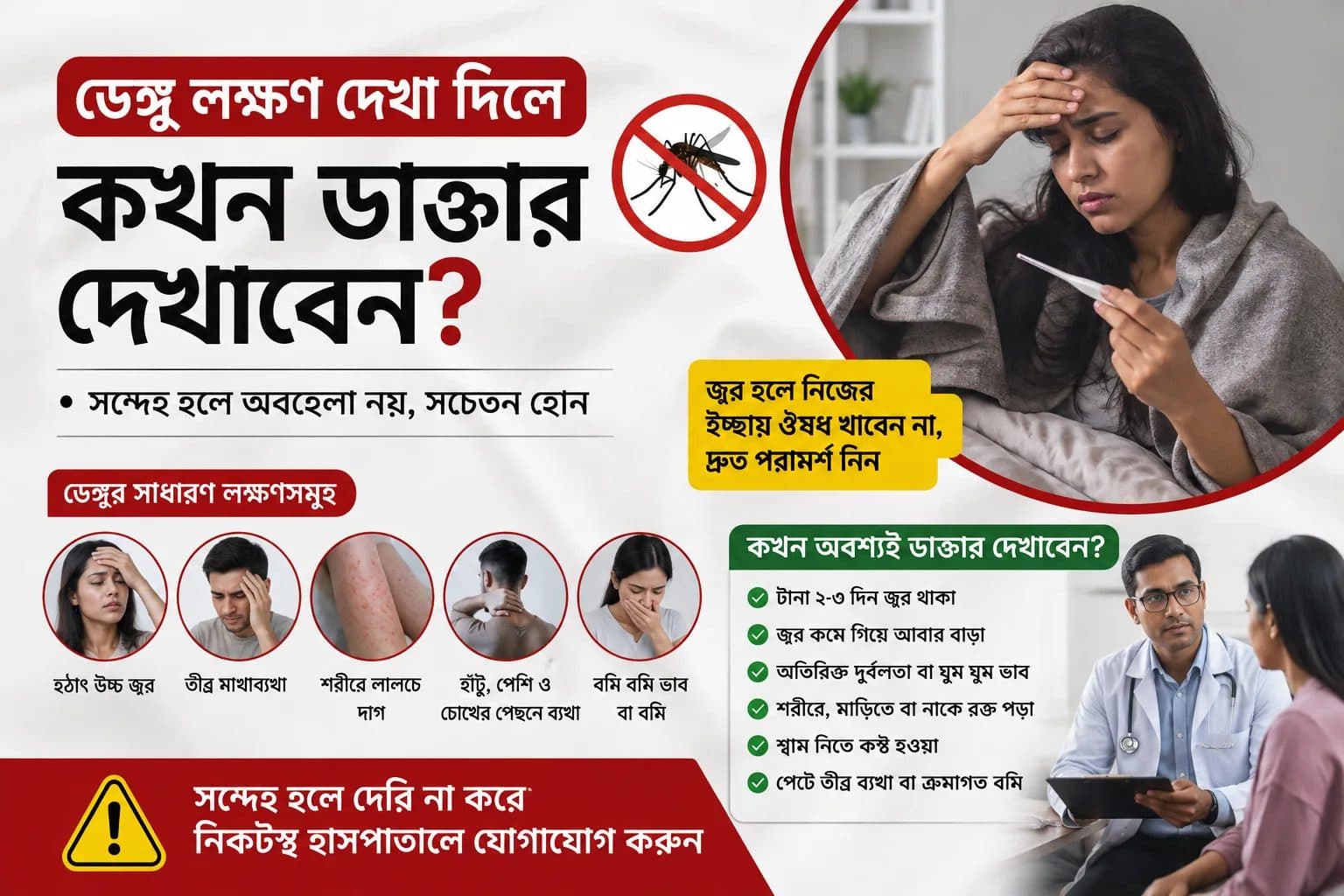
Fever cases rise across Khulna during the monsoon. Most turn out to be ordinary viral fever, but some become dengue. The difficulty is that during the first two or three days, there is no way to tell the two apart just by looking.
Families usually make one of two mistakes. Either they panic on day one and rush around unnecessarily, or they decide to wait it out until the situation has already become complicated.
This article is not about explaining what dengue is. It answers one question only: when should you see a doctor, and which one.
Does every fever need a doctor
Not every fever requires an immediate visit. But during the monsoon and the months that follow, when dengue is circulating in your area, the calculation changes.
As a general rule:
See a doctor if the fever lasts more than 48 hours
If someone in your family or neighbourhood has recently had dengue, see a doctor on the first day
If the patient is a child, an elderly person, a pregnant woman, or someone with diabetes, kidney disease or heart disease, do not wait at all
For that last group, dengue can turn serious quickly, which makes a wait-and-see approach risky.
What to do on which day of the fever
Dengue usually moves through three phases, and what you should do differs in each.
Phase one (days 1 to 3)
The fever comes on suddenly, along with headache and body aches. This is a good time to see a doctor, since the doctor decides whether testing is needed and which medicines are safe.
Phase two (days 4 to 6)S the most important
The fever starts to come down during this period, and many families assume the danger has passed. In reality, the riskiest phase of dengue begins after the fever drops. According to the US Centers for Disease Control and Prevention, severe dengue often starts within a day or two of the fever going away.
So keep watching the patient closely even after the temperature falls. Staying in touch with the doctor matters most during this window.
Phase three (days 7 to 10)
The body gradually recovers. Weakness can linger for a while. Attend the follow-up visit if your doctor has advised one.
Signs that mean going to hospital even at night
If any of the following appear, do not wait for morning. Go directly to the emergency department of the nearest hospital.
Severe abdominal pain
Repeated vomiting
Bleeding from the nose or gums
Black stools
Difficulty breathing
Cold hands and feet
Extreme drowsiness, lethargy or unusual restlessness
Passing much less urine, or no urine for six to eight hours
These are known in medicine as warning signs. At this stage, waiting for a chamber appointment is not the right call. The emergency department is.
Which specialist should you see
This is where most of the confusion sits. Put simply:
Adult patient → Medicine Specialist
Fever, suspected dengue and general medical complications all start here. The medicine specialist will refer you onward if needed.
Child patient → Pediatrician
Medicine dosages and fluid calculations are different for children, so going straight to a pediatrician is the safer route.
Pregnant woman → Gynecologist together with a Medicine Specialist
Dengue during pregnancy means both mother and baby need monitoring. Always inform your own gynecologist.
Any warning sign present → Hospital emergency department
At that point there is no time to research which specialist is best. Getting to a hospital is the priority.
How to prepare before the visit
Chamber time is usually short. Organising a few things beforehand helps the doctor reach the right decision much faster.
Note the exact date the fever started. In dengue management, which day of fever the patient is on is one of the most important pieces of information
Bring a list of every medicine taken so far, or the packets themselves
Bring any previous reports, especially earlier blood test results
Mention any other conditions the patient has diabetes, high blood pressure, kidney or heart disease
Mention whether anyone in the family or neighbourhood has recently had dengue
Note whether urine output has dropped
Questions worth asking your doctor
Many people leave the chamber only to realise they forgot the question that mattered. These four cover most of the uncertainty.
Which symptoms mean I should go to hospital immediately?
When should the next visit or the next test happen?
How much fluid should the patient drink each day?
Which medicines should we avoid?
That last question matters a great deal, because certain common pain and fever medicines can increase the risk of bleeding in dengue.
Two things to know about testing
Confirming dengue requires a blood test. In Bangladesh, dengue is commonly identified through the NS1 antigen test, with other blood tests added as needed.
Keep two points in mind:
Your doctor decides which test and when. There are specific rules about which test is reliable on which day of the fever. Getting tested on your own at a diagnostic centre can mean testing at the wrong time and getting a misleading result.
A negative report is not the end of the matter. If symptoms persist, follow your doctor's guidance.
Common mistakes families in Khulna make
Buying medicine directly from a pharmacy. The habit of picking up a painkiller at the first sign of fever can be dangerous in dengue.
Stopping care once the fever drops. As covered above, that is exactly when vigilance matters most.
Interpreting test reports on your own. Panicking over a platelet count, or feeling reassured by one, are both mistakes. Reading a report is the doctor's job.
Delaying in order to reach a bigger hospital far away. When warning signs appear, reaching the nearest hospital comes first.
Find a doctor in Khulna
The most frustrating part of a fever scare is hunting for a doctor. Who sits where, at what hours, and exactly where the chamber is located searching for these details eats up valuable time.
On DoctorsFindBD you can search by area and specialty, with chamber addresses and visiting hours in one place.
References
World Health Organization (WHO) Dengue and severe dengue: who.int
US CDC Clinical Features of Dengue: cdc.gov
US CDC Severe Dengue: Know the Warning Signs: cdc.gov
Directorate General of Health Services (DGHS), Ministry of Health & Family Welfare, Bangladesh Daily Dengue Situation: dashboard.dghs.gov.bd
IEDCR, Bangladesh National Guideline for Clinical Management of Dengue Syndrome: nbph.iedcr.gov.bd