


Dog or Cat Bite: What to Do in the First 15 Minutes
Rabies is a disease where survival is almost impossible once symptoms begin. Yet it is almost entirely preventable if the right steps are taken immediately after a bite. The correct way to wash the wound, when to go to hospital, and the mistakes that can cost a life.
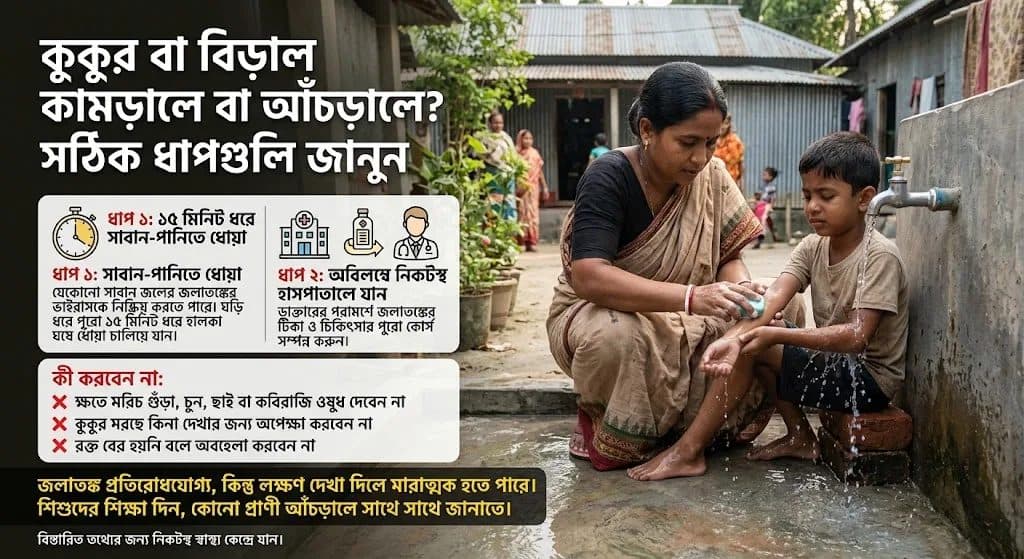
A street dog gave chase and left a scratch on your leg. Or the household cat got carried away during play and bit your hand. There was barely any blood, so it seems like nothing worth worrying about.
That instinct is the most dangerous one there is when it comes to rabies.
According to the World Health Organization, dog bites and scratches cause 99 percent of human rabies cases. And once the virus reaches the central nervous system and symptoms appear, the disease is fatal in 100 percent of cases. There is no treatment.
But the other side of that is just as important. Rabies deaths are preventable if the right steps are taken promptly after exposure.
Which means everything depends on what you do in the first few hours.
The picture in Bangladesh
The country has made real progress. After the National Rabies Elimination Programme launched in 2011, deaths fell sharply. Before 2010, more than two thousand people died of rabies each year. That number has come down considerably.
There is a worrying trend, though. Data from the Infectious Diseases Hospital in Dhaka show 42 rabies deaths in 2023, 58 in 2024 and 59 in 2025. The numbers are climbing again.
One more finding is worth sitting with. A community study in Bangladesh found that 59 percent of dog bite victims first went to a traditional healer rather than a hospital, and only 2 percent washed the wound properly with soap and water.
The problem is not a shortage of vaccine. The problem is what people know.
First step: wash the wound for 15 minutes
This is the single most important thing you can do, and it is the step most often skipped.
WHO guidance is specific: after a bite or scratch, wash the wound with soap and running water for at least 15 minutes, as soon as possible.
How to do it
Turn on a tap, or have someone pour water steadily. Any soap works: bath soap, hand soap, even dish soap.
Apply soap in and around the wound, scrub gently, and keep the water running throughout. Reapply soap as you go.
Time it properly and complete the full 15 minutes. It will feel long. That is exactly the point, because this is what reduces the amount of virus at the site.
Why soap specifically
The rabies virus has a fatty outer envelope, and soap breaks that envelope down. That is why the guidance says soap, not water alone.
After washing
Apply povidone iodine or an antiseptic if you have one. If you do not, do not waste time looking for it. The washing is what matters.
Then get to a hospital quickly.
What never to do
Almost everything traditionally applied to bite wounds in our region does harm rather than good.
Do not apply chilli powder, lime, turmeric, kerosene, oil or ash. These do not kill the virus. They worsen the wound and raise the risk of infection.
Do not go to a faith healer or traditional healer. The time lost is the real damage.
Do not bind the wound tightly or rush to have it stitched. Bite wounds are usually not sutured immediately, because closing them can trap the virus inside. Let a doctor decide.
Do not wait to see whether the animal dies within a week. That habit has cost many lives. Start treatment now; the animal can be observed separately.
Do not dismiss it because there was no bleeding. A graze or a minor scratch still carries risk.
How exposure risk is classified
WHO divides exposure into three categories.
Category I: Touching or feeding animals, licks on intact skin. Generally no risk.
Category II: Nibbling of uncovered skin, minor scratches or abrasions without bleeding. Vaccination is needed.
Category III: Single or multiple bites or scratches that break the skin, contamination of a wound or mucous membrane with animal saliva, direct contact with bats. Here, immunoglobulin may be needed alongside the vaccine.
Which category applies to you, and what treatment follows, is for a doctor to determine after examining the wound. Do not assume it yourself.
Do not dismiss cat bites
Many people assume cats are harmless, especially a pet at home. That is a misconception.
Cats can carry the rabies virus too. Hospital data from the Infectious Diseases Hospital show that after dogs, cats account for the second highest number of animal bite patients.
There is another issue. A cat's teeth are narrow and sharp, so the wound goes deep while looking small on the surface. That raises the risk of bacterial infection as well.
The same rules apply for pets. If the animal has been vaccinated, tell the doctor, as it helps inform their decision.
What to know about the vaccine
Do not lose time. The sooner treatment starts the better. Same day is ideal.
Go even if you are late. Do not skip it because a few days have passed. The vaccine works right up until symptoms begin.
Complete the full course. This is where things most often go wrong. People stop midway because they feel fine or because the dog seems healthy. An incomplete course does not protect you. Attend every date the doctor gives you.
Where to get it. Under the National Rabies Elimination Programme, rabies vaccine is provided free of cost at government health facilities at district and upazila level. In Dhaka, the Infectious Diseases Hospital in Mohakhali is the main centre for this treatment.
Supply, however, is not always consistent. A phone call before you travel can save time.
Ask your doctor about tetanus too. It needs consideration with any bite wound.
Action has to come before symptoms
The incubation period for rabies is typically two to three months, though it can range from one week to a year. The closer the bite is to the brain, the faster symptoms develop.
Early symptoms look ordinary: fever, pain, or an unusual tingling or burning sensation at the wound site. Once the virus spreads through the nervous system, signs such as fear of water and fear of drafts of air appear.
By that stage, nothing can be done.
Which is why this is entirely about acting before symptoms, right after the bite.
Extra care with children
Globally, 40 percent of rabies deaths are in children under 15.
The reason is straightforward. Children get close to animals more often, and when they are bitten or scratched they often stay quiet at home for fear of being scolded.
So tell them clearly: if any animal bites or scratches you, say so immediately, and nobody will be angry.
And if you notice an unexplained scratch or wound on your child, ask about it.
Which doctor should you see
After a bite, go first to the nearest government hospital or rabies prevention centre, since that is where the vaccine and immunoglobulin are available.
Afterwards you may need:
A Medicine Specialist for wound infection or complications
A Surgeon for deep or large wounds, or wounds on the face or hands
A Pediatrician for children
On DoctorsFindBD you can search by area and specialty, with chamber addresses and visiting hours in one place.
Three things to remember
One, wash any bite or scratch with soap for 15 minutes.
Two, skip the home remedies and go to a hospital.
Three, complete the full vaccine course.
Get those three right and the risk of dying from rabies falls close to zero. Pass this on to your family, especially if there are young children at home.
References
World Health Organization (WHO) Rabies fact sheet: who.int
World Health Organization (WHO) Rabies vaccines and immunoglobulins, WHO position and exposure categories: who.int
US CDC Rabies Prevention and Control: cdc.gov
National Rabies Elimination Programme, Communicable Disease Control, DGHS Bangladesh National Guideline for Animal Bite Management in Bangladesh
Global Alliance for Rabies Control National Rabies Elimination Program, Bangladesh: rabiesalliance.org